REVIEW · TROMSO
Tromsø: Cross-Country Skiing Beginner Course + Transfer
Book on GetYourGuide →Operated by Tromsø Outdoor · Bookable on GetYourGuide
Skiing in Tromsø starts with one awkward lesson. This beginner course turns that moment into progress on Tromsøya, with a guide who helps you get moving fast. You’ll learn how to handle skis, balance, and confidence before you chase the fun stuff.
I also love the break built into the ride: a hot drink and local lefse while you rest in the forest. It’s not just a snack stop; it’s a real pause that makes the cold feel manageable and the experience feel local.
One thing to plan for: you’ll need proper warm and windproof clothing. Winter gear isn’t included in the price, and the session can feel harder than you expect at first, especially if conditions are a bit icy.
In This Review
- Key Highlights You’ll Actually Feel During the Course
- First Steps on Tromsøya: what this beginner course really teaches
- Meeting at Tromsø Outdoor: gear pickup and transfer that saves your energy
- How the 3-hour arc works: from skis on to small hills done
- Part 1: getting comfortable (yes, falling is part of it)
- Part 2: flat-land technique you can repeat
- Part 3: multiple techniques and a hill check
- The Tromsøya setting: birch and spruce, prepared trails, real winter calm
- The forest break: hot drink and lefse that make the lesson feel Norwegian
- Instructors and pacing: what “patient” coaching looks like on skis
- Transfers, timing, and what to wear: making the most of 3 hours
- What to bring
- Weather reality check
- Who should book this course (and who should wait)
- Value after you finish: rent skis and try what you learned
- Price and logistics in plain terms
- Should you book Tromsø cross-country skiing beginner course + transfer?
- FAQ
- How long is the beginner cross-country skiing course?
- Where do we meet for the tour?
- What is included in the $131 price?
- Do I need to rent winter clothes?
- Is the instruction available in English?
- How big is the group?
- Can I cancel for a full refund?
Key Highlights You’ll Actually Feel During the Course
- Learn to fall and get up early, so the hardest part doesn’t become scary.
- Prepared trails on Tromsøya through birch and spruce forests, mostly on marked routes.
- Hot drink + lefse break right in the forest, adding a true Norwegian pause.
- Small hills by the end so your skills get tested, not just demoed.
- Small groups (up to 8), which means the guide can adjust your technique on the spot.
- Patient English coaching from guides like Joanna, Mathieu, Marta, Melanie, and Alex (names vary by session).
First Steps on Tromsøya: what this beginner course really teaches
Cross-country skiing in Tromsø sounds like a giant winter achievement. In reality, the first goal is simpler: learn how to control your body on skis without panic. This course is designed to get you from total beginner to confidently moving through a short lesson arc, all within about 3 hours.
The “beginner” part isn’t just soft talk. You start with basics that matter—like how to put on your gear and how to manage the most basic risk of the sport: falling. That early practice is a big deal. If you know how to get up efficiently, the rest of the session becomes learning instead of fear management.
You also get coached through progression. You begin on completely flat areas, then you work toward small hills once your balance and technique catch up. That pacing helps you feel real improvement by the end, not just a scenic walk with skis strapped to your feet.
You can also read our reviews of more tours and experiences in Tromso.
Meeting at Tromsø Outdoor: gear pickup and transfer that saves your energy
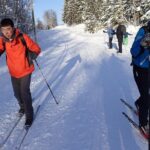
The day starts at Tromsø Outdoor activity and rental centre. The guide meets you outside about 10 minutes before departure, so plan to arrive a bit early and settle in before the group gathers.
This matters more than it seems. When you’re cold and slightly nervous, good organization keeps you from rushing. Here, the setup is practical: you’ll be provided with skis, poles, and ski boots, and the guide helps you get ready before you head out.
Then comes the transfer. You don’t have to solve winter navigation or figure out where trails begin. You just ride to the learning area on Tromsøya, a short drive away from the city center. That’s a smart use of time—especially for a beginner course with a total duration of only three hours.
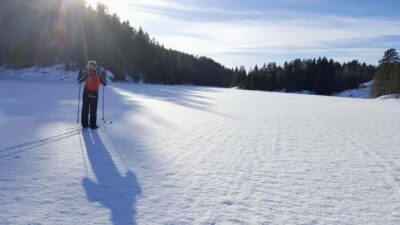
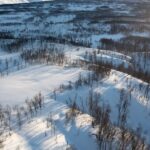
If you’re the kind of person who likes seeing how locals spend time outside, you’re going to like the setting once you arrive. The terrain you ski is in a natural area on Tromsøya, with birch and spruce forests and mostly prepared trails.
How the 3-hour arc works: from skis on to small hills done
This experience is structured like a lesson, not a sightseeing bus tour. You’ll learn the “mechanics” in steps, which is why so many people come out feeling like they can actually try again on their own.
Part 1: getting comfortable (yes, falling is part of it)
The first instruction focuses on fundamentals: how to get your skis on and off, and how to fall down and then get up. It’s not glamorous. It is useful.
That early confidence-building is exactly what lets you stop thinking about survival and start thinking about technique. Several guides are described as patient and encouraging, and the best sessions are the ones where you feel safe practicing mistakes in a controlled way.
Part 2: flat-land technique you can repeat
After the setup lessons, you move to basic techniques on a flat area. This is where you learn how to move your weight and coordinate your poles. For many first-timers, this is also where you discover that cross-country skiing isn’t just sliding. You’re working your hips, legs, and balance at the same time.
Expect the workout to surprise you a bit. One participant said it was harder than expected, but worth it. That tracks: the motion is smooth when it’s right, and awkward when it’s new. Either way, you’ll be doing real skiing, not just standing around.
Part 3: multiple techniques and a hill check
Once you can move on the flats, you’ll work toward different techniques. Then the course shifts to the fun test: small hills.
These hills are the payoff moment. You get to challenge yourself after you’ve built basic control. It’s also a good reality check. If the hill feels too much, the lesson gives you a chance to adapt your body position and pacing instead of quitting.
If you’ve ever tried skiing on your own too early, you’ll appreciate the structure here. It saves you from guessing.
The Tromsøya setting: birch and spruce, prepared trails, real winter calm
The skiing happens on the island of Tromsøya, in a scenic area toward the northern part of the island. The tour moves you into a quieter natural setting than you’ll find right in the city center.
You’ll notice two practical things about the environment:
First, the trails are mostly prepared, which helps beginners focus on balance and movement. This reduces the “what if the snow is weird?” problem and lets you practice what the guide is teaching.
Second, the forests are a mix of birch and spruce. That combination matters visually in Tromsø winters, when the light can be low and the sky can change fast. Even when visibility isn’t perfect, the forest still gives the experience shape.
There’s also something underrated about skiing near the city but not in it. The drive keeps the session efficient. The trails keep it authentic.
The forest break: hot drink and lefse that make the lesson feel Norwegian
About halfway through (or at a natural rest point), you take a break served with a hot drink and a sweet snack: lefse. This isn’t listed as an optional extra. It’s part of the course design.
Why it works: beginners burn energy quickly and often underestimate how cold the “practice period” can feel. A warm drink resets you. It also gives you a chance to catch your breath and think about what the guide said, without the pressure of immediate skiing.
And lefse is one of those foods that makes the whole thing feel rooted in Norway rather than just an outdoor activity. You’re learning the national sport, then you get a national-style snack.
If you’re someone who enjoys small cultural touches that don’t slow you down, this break hits the sweet spot.
Instructors and pacing: what “patient” coaching looks like on skis
Most of the best value in a beginner course is the coaching. You can have good snow and still struggle if your guide can’t translate technique in a way you can use.
In this course, instruction is in English, and you’re in a small group capped at 8 participants. That limit is important. On wider-group tours, beginners often get stuck waiting for corrections. Here, your guide has a better chance to watch you and adjust your movement.
You’ll also see a pattern in how people describe the teaching. Many sessions are praised for breaking things down into simple steps, and for mixing fun with learning. Guides called out by name include Joanna, Mathieu, Marta, Melanie, and Alex, with feedback mentioning that they were interactive, professional, encouraging, and good at explaining technique.
One detail I think you’ll appreciate: the course includes practical tests, not just demonstrations. You learn skills, try them, and then build. The timing is described as well managed enough that you don’t feel rushed, and you still get to challenge yourself.
Transfers, timing, and what to wear: making the most of 3 hours
The price is $131 per person for a 3-hour beginner course that includes your skis, poles, boots, a guide, and the transfer, plus the hot drink and lefse break.
Is that a lot for a short outing? In winter, it often is, until you compare it to the real cost of renting equipment, finding a safe trail area, and trying to figure out technique without coaching. Here you pay for the full package plus instruction that helps you actually progress.
For many first-timers, the biggest hidden cost is time and frustration. A guided course removes both. You spend your energy learning instead of experimenting.
What to bring
You’re told to bring warm clothing. The key point is that the tour requires warm and windproof layers. Winter clothes aren’t included in the price, but they can be rented separately at the rental center upon prior arrangement.
If you’re thinking about what to wear, I’d treat this like a cold-weather priority list:
- windproof outer layer (you don’t want the wind to steal heat)
- warm base layers
- gloves and hat if you normally get cold quickly
Weather reality check
Northern Norway weather can change quickly. One review mentions conditions were a bit hazardous due to weather, and safety was handled seriously by the guide. That’s not something to fear. It’s something to respect: if conditions are tough, listen to the guide and trust that safety comes first.
Who should book this course (and who should wait)
This is a strong choice if:
- you’re a true beginner and want structured instruction
- you want a real outdoor workout with a clear skill payoff
- you prefer small groups and hands-on guidance
- you want to see how locals ski on Tromsøya without planning everything yourself
It may not be the best fit if you:
- are unable to follow active safety instructions during skiing
- have vertigo, or pre-existing medical conditions (listed as not suitable)
- use a wheelchair or have mobility impairments (listed as not suitable)
- are traveling with younger kids (the listing says not suitable for children under 8 and also notes not suitable for children under 12, so check age fit carefully)
Also, if you hate the idea of learning through awkward moments, remember the lesson starts with how to fall and get up. This course is built for practice. That’s the point.
Value after you finish: rent skis and try what you learned
One of the best parts of this setup is what happens after the lesson. After you finish, you can rent skis to practice cross-country skiing on your own.
That turns the course from a one-time activity into a real start for a new skill. Beginners often need repeat sessions to feel fluid. The ability to build on what you learned while the memory is fresh is a big value driver.
Price and logistics in plain terms
At $131 per person, you’re paying for more than equipment. You’re paying for:
- guidance from an English instructor
- equipment including skis, poles, and boots
- transfer from the Tromsø Outdoor meeting point to the trails
- a warm hot drink and lefse snack
- a teaching plan that runs for a full 3 hours
If you already have your own gear and you know exactly where to go, you could probably do cross-country skiing cheaper. But beginners rarely know where to start safely, or how to avoid picking up bad technique.
This course is priced like a “learn it right away” option. For most people, that’s the smart trade.
Should you book Tromsø cross-country skiing beginner course + transfer?
If you’re in Tromsø and you want an outdoor winter experience that’s both practical and genuinely Norwegian, I’d book it. The biggest reason is the structure: fall down and get up, learn basic technique on flats, then try your skills on small hills in a scenic setting on Tromsøya.
You’ll also enjoy it if you like small-group teaching. With a group size limited to 8, the guide can actually help you. And the forest break with hot drink and lefse is a warm little reset that keeps the experience from feeling like nonstop hard work.
Just go in prepared for the physical side. It’s harder than some people expect, but that’s also why it feels like progress. Dress for wind and cold, and treat the first awkward minutes as the price of admission to getting the hang of it.
FAQ
How long is the beginner cross-country skiing course?
The course lasts 3 hours.
Where do we meet for the tour?
You meet outside Tromsø Outdoor activity and rental centre about 10 minutes before departure.
What is included in the $131 price?
The price includes skis, poles, ski boots, a guide, hot drink, sweet snack (lefse), and transfer.
Do I need to rent winter clothes?
Winter clothes are not included in the tour price, but you can rent winter clothes separately at the rental centre upon prior arrangement. You’re required to wear warm and windproof clothing.
Is the instruction available in English?
Yes, the instructor provides English instruction.
How big is the group?
This is a small group limited to 8 participants.
Can I cancel for a full refund?
Yes. The activity offers free cancellation up to 24 hours in advance for a full refund.